

Blog
The Paradox of Financial Intermediation: How Do We Finance the Economy?
 Romania has the lowest level of financial intermediation in the European Union, whereas Romanian firms have among the highest levels of indebtedness. Understanding this paradox is crucial in assessing the financing of companies. Developing Romania’s economy on sound foundations means concrete and effective paths to support financing
An overview of state-owned enterprises: the two-speed sector
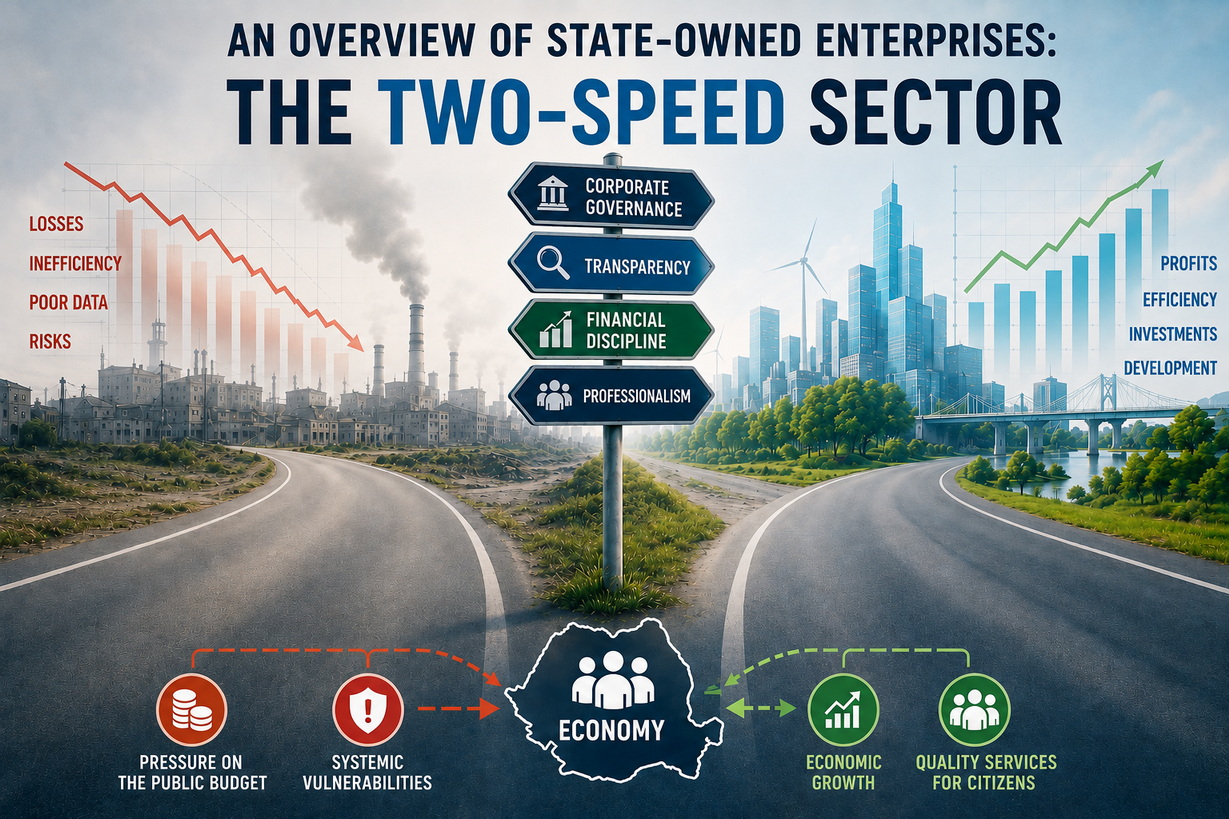 The performance of state-owned enterprises (SOEs) has broad direct implications for the economy through the quality of the services provided, as well as through financial discipline and the manner of implementing corporate governance principles. A poor management of SOEs results in increased costs, inefficiency and
External imbalances and export competitiveness: structural challenges
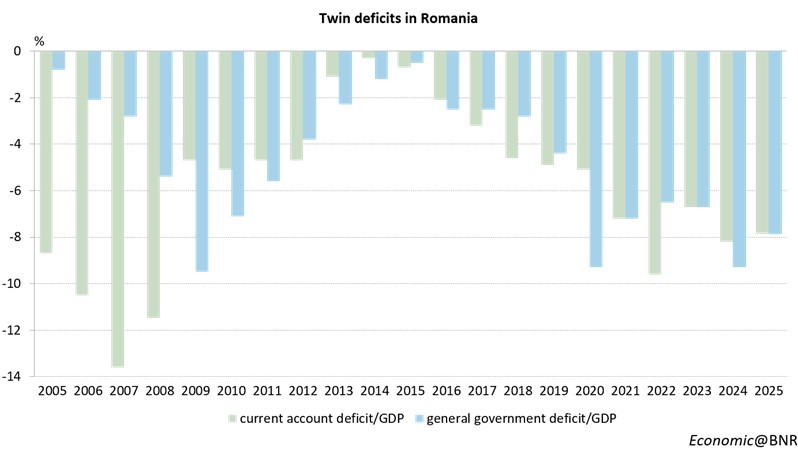 The persistence of external imbalances increases the dependence on foreign capital flows and affects financial sustainability. In Romania, external imbalances have structural causes: demand exceeds domestic output, so we consume more than we produce, and imports outpace exports.
Financial sustainability in architecture of convergence – Economic@NBR
 We have launched the second volume of the Economic@NBR project, at the current juncture dominated by multiple uncertainties and challenges, when economic policy decisions require coherence, consistency and rigorous substantiation. The volume brings together the most relevant indicators for Romania’s economic picture,
Hormuz Inflation – The New Challenge for Monetary Policy
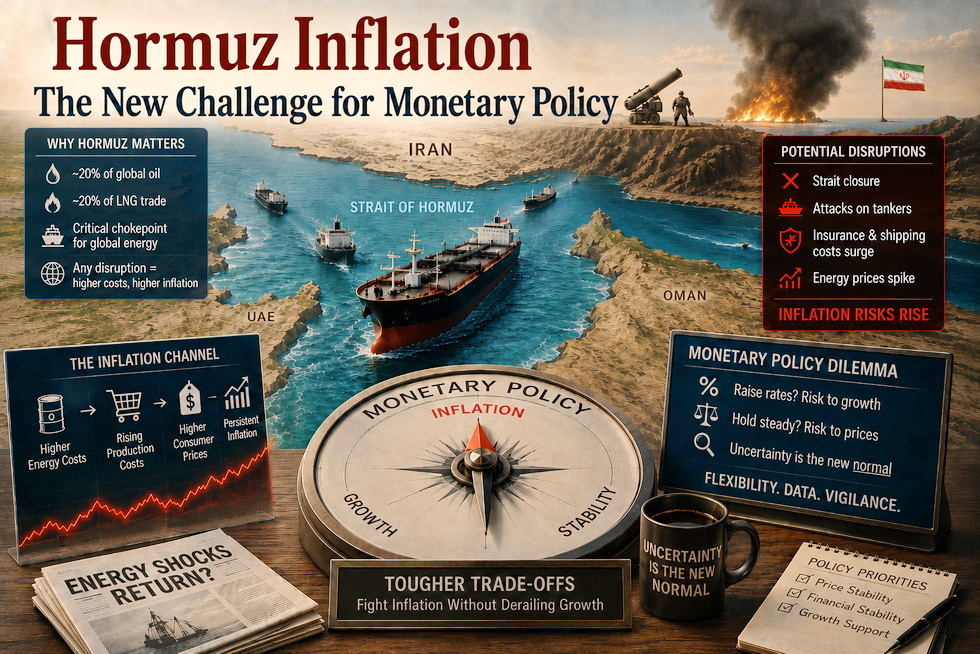 With or without a lasting ceasefire, the Middle East war is fuelling severe uncertainties, entailing a pick-up in inflation, in tandem with a slowdown of economic activity. Over the short term, the impact on inflation stems directly from higher fuel prices. Yet long-term effects are much more difficult to project, since they hinge both on the